
How to Evaluate Air Fryer Basket Handling Before Choosing a Supplier
Evaluate an air fryer basket through the loaded handling journey—not an empty-drawer demonstration—before committing to a supplier and production sample.

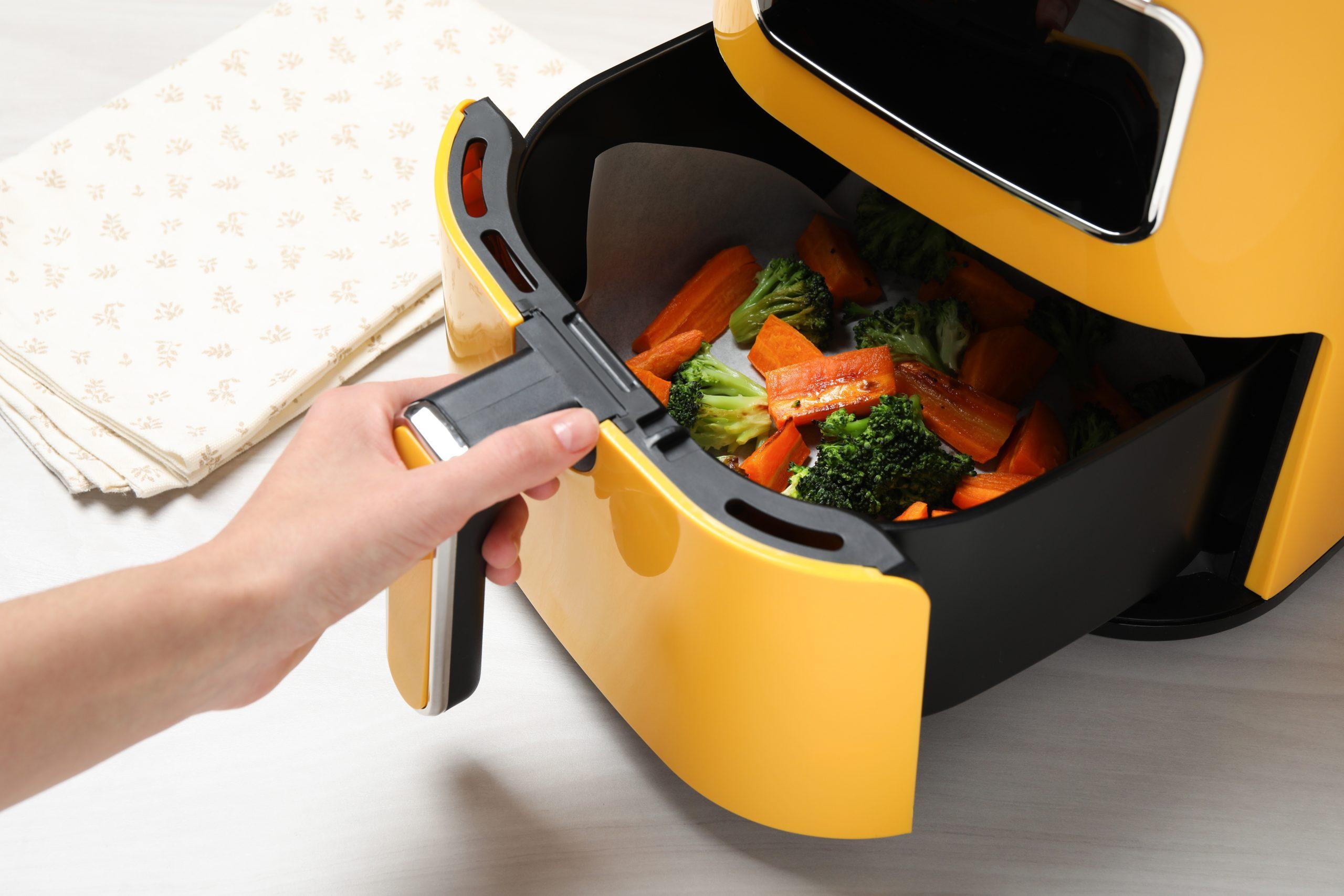
An air fryer drawer can look convincing in a supplier presentation and still be awkward at the moment a user needs it most: when it is loaded, hot and halfway out of the appliance. A smooth empty-drawer demonstration proves little about grip, balance, accidental release or the effort of returning the drawer to its rails. These are not cosmetic details to leave until the last sample review. They shape the ordinary cooking journey and the instructions a brand must stand behind.
For sourcing teams, the question is not “Does the handle feel premium?” It is whether a defined set of users can complete the intended handling tasks with the proposed basket, food load and instructions—without confusing a detachable basket with a drawer that should remain assembled during shaking. Public manufacturer instructions make that distinction visible. Philips describes a two-step release-button action for certain models, while its shaking guidance has the user remove and mix a loaded basket. Those are product-specific instructions, not a universal basket design. They show why a buyer needs to evaluate the task, not just the component photograph.
Start with the sequence a customer will actually perform
Ask the supplier to demonstrate a complete cycle on the proposed production-intent sample: grip the handle, withdraw the drawer, inspect or turn the food, set the hot assembly down where the instructions permit, serve, reinsert the drawer and remove components for cleaning. A sample can pass one of these steps and fail another. A comfortable pull does not establish a stable loaded drawer on a countertop; an easy basket release does not establish that a user can avoid pressing it at the wrong time.
The sequence must name its conditions. Record the tested food mass and placement, whether the unit is cold or has completed a cooking run, the support surface, the user's hand protection and the permitted action. Do not treat a room-temperature empty demonstration as evidence about hot handling. Conversely, do not improvise unsafe hot-load trials to make a comparison dramatic. The test owner should approve a controlled method, follow the actual sample's safety instructions and stop when the method is not safe to perform.
There is no reason to force every architecture through one identical gesture. Some designs use an integrated drawer; others have a removable inner basket. The Philips release-button example is useful precisely because detaching and shaking are different actions. A supplier should state which action its own design expects, what prevents an unintended separation, and how that expectation will appear in the user instructions. The buyer evaluates each design against the same user goal, not an assumed identical mechanism.
Look for a failure at the transition, not just in the grip
The most revealing moments occur between states. Does the drawer remain controlled as its centre of mass moves away from the housing? Can the user find a stable place to set it without contacting an unsuitable surface? Does the basket align when returned, or does the user need a precise angle and repeated pushes? Is the release control distinguishable from the normal grip while the assembly is loaded? These are questions for sample observation and design review; this article does not claim that a particular supplier has failed them.
Retention features also need a clear explanation. Philips says a rubber plug on certain models helps hold the basket in place. That does not make the same plug appropriate for every product. It illustrates a sourcing risk: a small, apparently removable part may be part of the basket-retention system. The supplier should identify the function of each retaining feature, whether it is consumer-removable, how it is assembled and how a replacement part is specified. A user manual, service part map and approved sample should not contradict one another.
Ask the sample reviewer to log observations in task order, with short video where permitted and the exact sample revision. Record a failed attempt, a compensating two-hand action or a need to consult the instructions—not merely a final “pass.” If one reviewer finds the release obvious and another presses it unintentionally, that disagreement is useful evidence for a follow-up usability study. It is not a reason to average the comments into a confident score.
Use a small task protocol instead of an unqualified feel score
ISO 9241-11's public abstract frames usability as an outcome of use across products and services, but explicitly does not prescribe a specific evaluation method. The following task record is therefore a proposed sourcing tool, not a test required by ISO or an appliance safety standard.
| Task | Condition to fix | Observation to retain | Decision for the supplier |
|---|---|---|---|
| Withdraw and carry | Sample revision, load, operating state and permitted hand protection | Grip changes, tilt, unintended control contact and where the drawer can be set down | Revise handle, balance, instructions or acceptance method if the task is unreliable |
| Turn or shake food | Intended assembly state and user instruction | Whether food can be mixed without unintended basket release or loss of control | Clarify the mechanism and recheck the real user sequence |
| Reinsert | Same sample and loaded/empty condition | Alignment attempts, force variation and any obstruction | Investigate rail, latch or tolerance interaction before approval |
| Detach for cleaning | Cooled state and documented release method | Discoverability, required hand actions and retention-part identity | Align part design, manual and service map |
Choose participants and acceptance criteria before inviting suppliers to demonstrate. A development team can first use the protocol to identify design questions, then commission a controlled user study when the claim or risk warrants it. Do not invent a universal acceptable pull force, number of attempts or participant count from these public sources. Those decisions depend on the intended users, target market, appliance design and a qualified test plan.
The review also needs a place for constraints rather than a single winner. A strong retention feature may add cleaning steps. A large basket can change how the load balances in the hand. A release guard may prevent accidental activation but become difficult to operate intentionally. Supplier comparison should make these trade-offs explicit, then decide which one is acceptable for the product brief. This is a product and sourcing decision, not a taste contest about handle finish.
Freeze the handling evidence with the selected sample
Before choosing a supplier, request a drawing or part map for the drawer, handle, release, retention features and rails, plus the proposed user-operation wording. Link observations to the exact sample and revision. If tooling, spring force, coating thickness, basket insert or handle geometry changes later, determine which handling tasks need to be repeated. The instruction should be verified against the production-intent mechanism, not polished around a prototype that will not ship.
The outcome is a decision record the purchasing team can use: which handling journey the product promises, which sample performed it, what was observed, and which unresolved issue belongs to design, manufacturing or instructions. It will not certify safety or predict every household. It does prevent a pleasant empty-drawer demonstration from standing in for the loaded, ordinary act a customer will repeat for years.
Sources

Allen
Product Development & R&D, EVO
Focused on air fryer product development, engineering evaluation, OEM/ODM, sourcing and market analysis.
Related Insights
Air Fryer Airflow Development: Let the Full Load Set the Brief
A full basket can expose a weak design without identifying its cause. Learn how EVO's joint fan, air-path and structural review turns that result into better prototype comparisons and sourcing decisions.
Read ArticleShould Optional Air Fryer Features Be Quoted Separately?
Yes. Ask suppliers to price the base model and each option separately, including tooling, testing and packaging where relevant.
Read ArticleWhat Should I Confirm Before Approving an Air Fryer Sample?
Check the sample revision, accessories, controls and agreed test results against the RFQ, and record any approved deviations.
Read ArticleHave a question about this topic?
Ask EVO about the product technology, development considerations or sourcing implications discussed in this article.